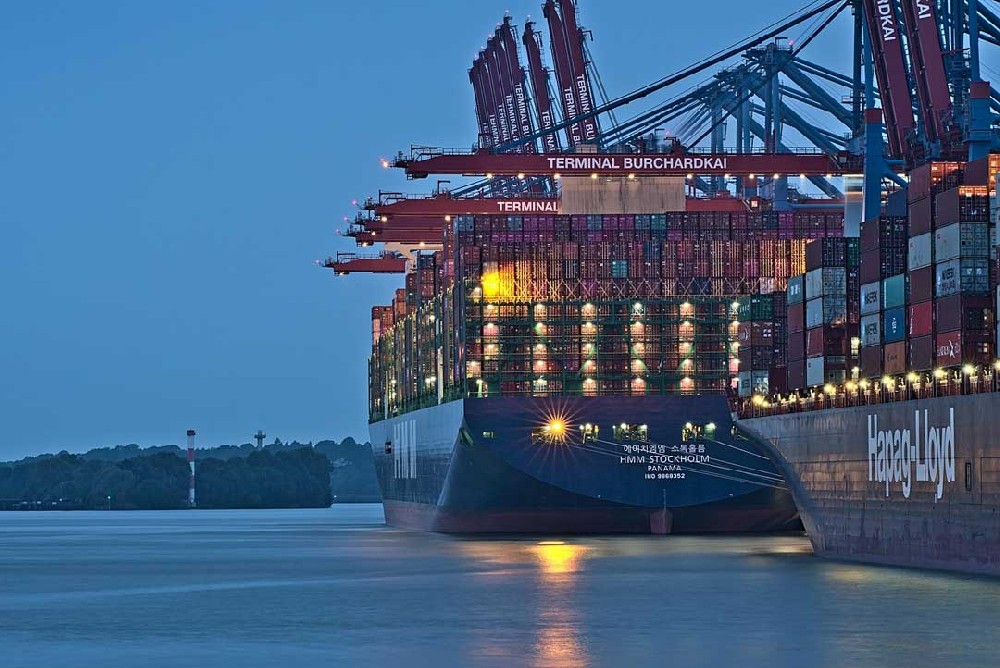
In 2024, China's home appliance industry delivered an impressive globalization report card: According to data from the General Administration of Customs, the export value of home appliances for the whole year increased by 8.6% year-on-year, breaking through the $112.4 billion mark for the first time and setting a new historical high. Behind this number, it is not only a milestone for Chinese manufacturing to transition from "product going global" to "brand going global", but also a breakthrough for enterprises to cope with the pressure of the domestic stock market.
Data interpretation: structural breakthrough in export growth
In 2024, China's home appliance exports will show a characteristic of "both quantity and price rising". From a category perspective, the two major categories of air conditioning and refrigerators contribute over 40% of the market share, with intelligent air conditioning exports growing by 19%. Refrigerators equipped with photovoltaic energy storage function have a premium of 30% in the European and American markets; From a regional perspective, emerging markets have become the main drivers of growth - Southeast Asia (+24%) and the Middle East (+18%) have strong demand, while the European and American markets have achieved a 3 percentage point increase in market share against the trend with high-end products. It is worth noting that the proportion of domestic brand exports has increased from 35% in 2020 to 52%. Enterprises such as Haier, Hisense, TCL, etc. have an average gross profit margin of 28% in overseas markets, significantly higher than the OEM model.
Policy driven: the superposition effect of double circulation and the "the Belt and Road"
The national strategy injects strong momentum into the export of household appliances. In 2024, the State Council's "Guiding Opinions on Promoting High Quality Development of Light Industry" explicitly proposed to "support home appliance enterprises in building overseas research and development centers and brand experience stores"; The Ministry of Finance will increase the efficiency of cross-border e-commerce B2B export tax refunds to 72 hours, reducing the financial pressure on enterprises. At the same time, the upgrading of national infrastructure jointly built by the "the Belt and Road" has unleashed the demand for household appliances: the completion of the China Laos railway has driven the sales of air conditioners in Haier's Thailand factory to increase by 37%; During the construction of Egypt's new administrative capital, Hisense has secured an order for 100000 sets of smart homes. The resonance between policy dividends and market opportunities promotes the shift of household appliance exports from "individual combat" to "systematic layout".
Enterprise Practice: Localization Operation and High end Breakthrough
Top enterprises build competitiveness through "localized research and development+global branding":
Localization of R&D: Midea has established an AIoT innovation laboratory in Vietnam to develop anti mold frequency conversion technology for high-temperature and high humidity environments in Southeast Asia, increasing product premium capacity by 15%;
Marketing globalization: Hisense has continuously sponsored top events such as the European Cup and World Cup, increasing its overseas brand awareness to 61% (according to Kantar research data). In 2024, its revenue in the European market increased by 34% year-on-year;
Nearshore manufacturing: TCL invests $1.2 billion to build a new color TV factory in Mexico, achieving "72 hour delivery" to the North American market and reducing logistics costs by 22%.
Challenge and Response: The Game of Globalization 2.0 Era
Despite remarkable achievements, Chinese home appliances still face multiple challenges when going global:
Upgrading trade barriers: The EU's "New Battery Law" imposes strict requirements on the carbon footprint of built-in lithium batteries in household appliances, requiring companies to increase compliance costs by an additional 5% -8%;
Localized operational risks: Some companies in South America and Africa have encountered exchange rate fluctuations, supply chain disruptions, and other issues. TCL's Brazil factory has suffered production capacity losses exceeding 300 million yuan due to local strikes;
Cultural Gap: The launch of a female voice assistant by a certain brand in the Middle East has sparked controversy, highlighting the importance of cross-cultural management.
In response, the industry is breaking through with three major strategies:
Technical standard leadership: Participate in the development of IEC (International Electrotechnical Commission) smart home interconnection standards and have the right to speak on rules;
Collaborative development of industrial chain: Gree collaborates with 50 core suppliers to build an industrial park in Indonesia, achieving localized production of core components such as compressors and motors;
ESG (Environmental, Social and Governance) System Construction: Midea has released the industry's first "White Paper on Sustainable Development of Overseas Factories", increasing the localization rate of employees to 89%.
Future Outlook: From 'Made in China' to 'Global Innovation'
In 2025, the globalization of household appliances will enter a period of deep integration. The tariff reduction dividends of RCEP (Regional Comprehensive Economic Partnership) continue to be released, and it is expected that the ASEAN market growth rate will reach over 20%; At the same time, AI technology is reshaping the industry landscape - Galanz has launched an AI cooking assistant that supports 56 languages, while Haier Smart Home meets the personalized kitchen needs of European users through an AI customization platform. These innovations indicate that Chinese home appliance companies have shifted from being driven by cost advantages to being driven by both technology and brand.
conclusion
The export value of 112.4 billion US dollars is not only a breakthrough in numbers, but also marks a leap in the position of China's home appliance industry in the global value chain. In the face of a complex and ever-changing international environment, only by adhering to long-term principles, deepening localized operations, and building technological moats can we steadily and steadily navigate the vast sea of stars in the global market.


全国咨询热线
联系人:KEG销售总监
手 机:13750888837
电 话:400-827-3568
公司地址:East Zone, Guanhaiwei Industrial Park, Cixi City, Zhejiang Province, P.R.China
Copyright © 2026 Ningbo KEG Electrical Appliances Co.,LTD All Rights Reserved 地址:East Zone, Guanhaiwei Industrial Park, Cixi City, Zhejiang Province, P.R.China 备案号: 浙ICP备2022037159号 网站地图 (XML) 技术支持: Yini Company