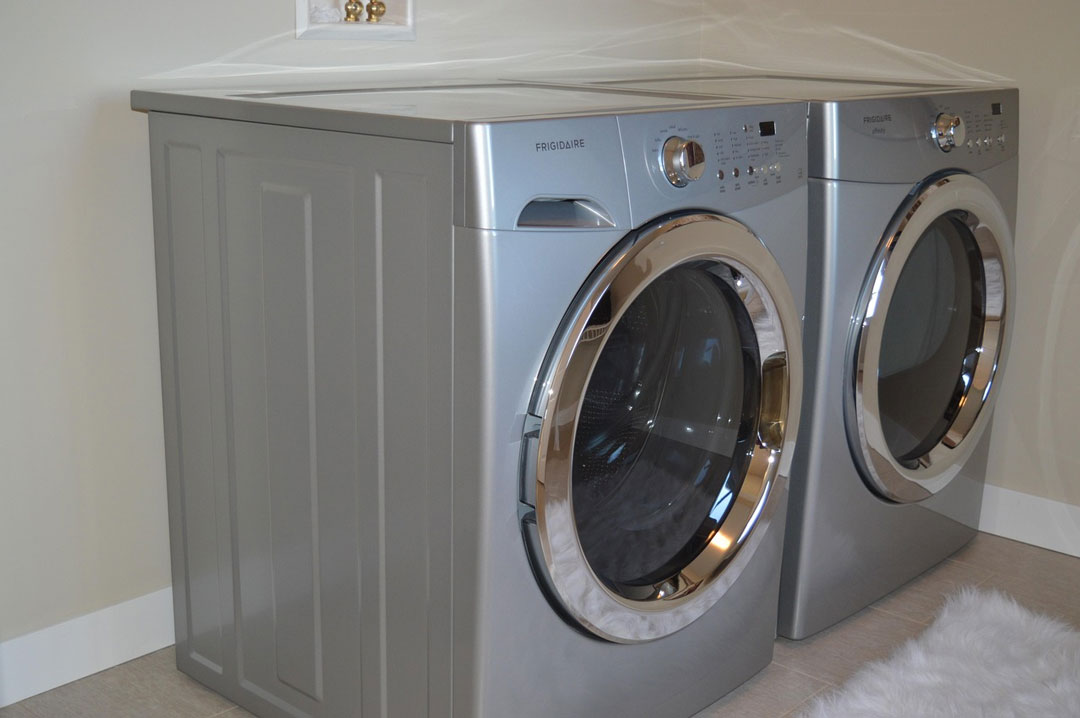
In 2024, China's home appliance industry achieved a dual breakthrough in domestic demand and exports driven by policies. Throughout the year, a multi-level and full chain policy system was formed around the core strategy of "trade in", combined with green and low-carbon transformation, technological innovation support, and international market expansion. The following are key policies and their impacts sorted by timeline:
January February: Policy Framework and Standard System Construction
January:
Carbon Footprint Accounting Standards Issued: The China Household Electrical Appliances Association has released the "General Principles for Carbon Footprint Accounting of Household Electrical Appliances" and the detailed rules for carbon footprint accounting of refrigerators and air conditioning products, providing scientific basis for household appliance enterprises to reduce emissions
New regulations on ecological fees in Russia come into effect: requiring home appliance companies exporting to Russia to pay ecological fees based on sales in 2023 and import/production in 2024, forcing companies to optimize overseas compliance management
February:
The fourth meeting of the Central Financial and Economic Commission has set the tone: General Secretary Xi Jinping has clearly proposed to encourage the trade in of household appliances and other consumer goods, promote large-scale recycling and utilization, and emphasize the linkage between central and local finance to support the entire industry chain
Implementation of policies for the recycling system of waste household appliances: The Ministry of Commerce and 9 other departments have issued a notice to clarify and improve the recycling system for waste household appliances and furniture, and to provide supporting construction guidelines to strengthen the standardization of the recycling process
March: The policy of exchanging old for new will be fully launched
On March 7th, the State Council issued the "Action Plan for Promoting Large scale Equipment Renewal and Consumer Goods Trade in", clarifying that trade in is the annual core task, covering areas such as home appliances and automobiles, and proposing four major actions (equipment renewal, consumer goods trade in, recycling, and standard upgrading)
Subsidy scope and standards: 8 types of household appliances such as refrigerators and washing machines will be subsidized according to energy efficiency grading (20% for level 1 and 15% for level 2), with a maximum subsidy of 2000 yuan per item, to promote green and intelligent consumption
Accelerate local supporting policies: Zhejiang, Sichuan and other regions have taken the lead in launching consumer voucher distribution and offline exhibition activities, combined with e-commerce platforms to create a "new season" consumption scene
July August: Policy intensification and operational optimization
July: The National Development and Reform Commission and the Ministry of Finance jointly issued Several Measures on Strengthening Support for Large scale Equipment Renewal and Consumer Goods Trade in, which clearly planned the implementation of a 300 billion yuan super long-term special treasury bond fund support policy and optimized the subsidy process
Subsidy expansion: Four types of small household appliances including microwave ovens and water purifiers have been added, and the subsidy for single household air conditioners has increased from 1 to 3, further stimulating consumption potential
Optimization of fund allocation: Priority should be given to regions with good policy implementation effects to alleviate the problem of resource imbalance between the east and the west
In August, the Ministry of Commerce and four other departments issued a notice on further improving the work of exchanging old appliances for new ones, launching a one-stop service of "replacement, installation, and collection" to simplify the consumer participation process
September December: Policy effects show and market boost
Consumer data is impressive: the trade in policy drove a year-on-year increase of 22.5% in the retail sales of household appliances in the fourth quarter, with a total retail market size of 902.7 billion yuan (+5.9%) for the year, involving over 37 million consumers and sales of 270 billion yuan
Green consumption upgrade: Sales of first level energy-efficient products account for over 90%, and the amount of waste household appliances recycled increased by 14.83% year-on-year, promoting the transformation of the industrial chain towards low-carbon recycling
Collaborative export efforts: Customs data shows that the annual export value of household appliances was 112.4 billion US dollars (+14%), supported by policy dividends and overseas localization layout (such as building factories in Southeast Asia and sports marketing), reaching a new high in exports
Other supporting policies and industry impacts
Standard Enhancement Action: The State Administration for Market Regulation and seven other departments have released the "Action Plan for Upgrading Equipment and Consumer Products through Standard Enhancement" to promote the upgrading of intelligent and healthy standards for household appliances
Technological Innovation Support: The government work report and proposals from the two sessions emphasize the need for the home appliance industry to strengthen core technology research and development under the "dual carbon" goal. Enterprises such as Haier and Midea have won the National Science and Technology Progress Award, demonstrating the leading role of technology
Layout of Silver Hair Economy: The State Council's "Opinions on Developing Silver Hair Economy to Enhance the Welfare of the Elderly" proposes the development of aging friendly home appliances, opening up new tracks for the industry
summarize
In 2024, the home appliance policy will focus on "trade in" as the core lever, and through the linkage between the central and local governments, increased financial subsidies, process optimization, and standard upgrading, it will successfully activate domestic demand and promote new export highs. The policy not only boosted consumption in the short term, but also laid the foundation for the long-term high-quality development of the industry through green transformation and technological innovation. In 2025, with the expansion of subsidy categories to 12 (including new digital products) and further simplification of processes, policy dividends are expected to continue to be released


全国咨询热线
联系人:KEG销售总监
手 机:13750888837
电 话:400-827-3568
公司地址:East Zone, Guanhaiwei Industrial Park, Cixi City, Zhejiang Province, P.R.China
Copyright © 2026 Ningbo KEG Electrical Appliances Co.,LTD All Rights Reserved 地址:East Zone, Guanhaiwei Industrial Park, Cixi City, Zhejiang Province, P.R.China 备案号: 浙ICP备2022037159号 网站地图 (XML) 技术支持: Yini Company